
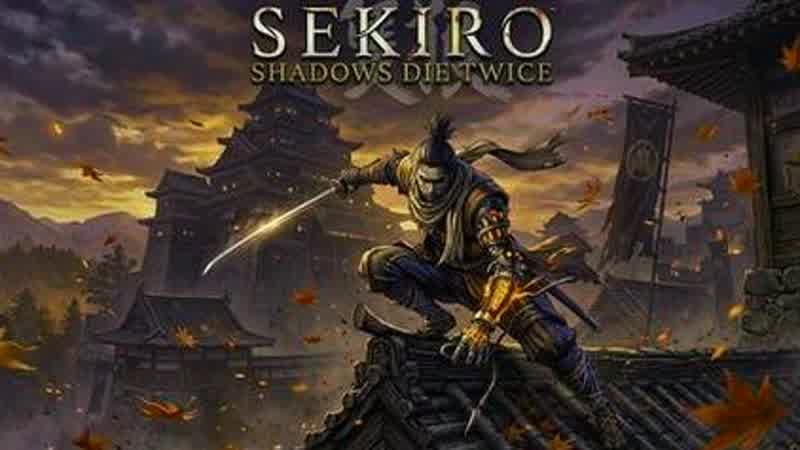
Competitive speedrunning has evolved from informal forum bragging rights into one of gaming culture's most rigorous technical disciplines. Across platforms like Speedrun.com and specialized community leaderboards, thousands of volunteer verifiers examine submitted world-record runs using digital forensics techniques originally developed for broadcast engineering and security auditing.
Why such scrutiny? Because in mature speedrun categories where human execution approaches theoretical perfection (Tool-Assisted Speedrun / TAS territory), the difference between first and second place is often measured in individual 16.67ms frames.
Title: Four Forensic Pillars of Speedrun Verification
Badge: Community Standards
- Load-Removed Time (LRT) vs. Real-Time Attack (RTA): PC speedruns use memory-reading autosplitters (`LiveSplit`) that pause the timer during disk/SSD loading screens so hardware budgets do not skew leaderboards.
- Audio Spectrogram Splice Detection: Continuous 50Hz/60Hz electrical mains hum and background room acoustics expose hidden video cuts when viewed in spectral analysis software (`iZotope RX` / `Audacity`).
- Deterministic PRNG Seed Tracking: Many classic and modern engines advance their Pseudo-Random Number Generator (PRNG) on every rendered frame or player input, allowing moderators to simulate whether an ultra-rare drop sequence was mathematically possible.
How Audio Spectrograms Catch Spliced Runs
One of the oldest forms of speedrun fabrication is splicing—stitching together the best segments from multiple separate attempts during a black fade-out or loading screen. Visually, a fade to black looks identical from one run to the next. Acoustically, however, analog capture cards, microphone preamps, and game audio synthesis buffers leave a continuous fingerprint:
- Phase Discontinuity: Cutting an uncompressed audio waveform mid-cycle creates a microscopic vertical step function that registers as an ultrasonic broadband spike on a frequency spectrogram.
- BGM Sample Alignment: In games where background music streams continuously across room transitions, a splice shifts the musical beat relative to the transition animation by tens of milliseconds.
Deterministic RNG and Input Polling Audits
Even more fascinating is PRNG state reconstruction. Computers cannot generate truly random numbers without external entropy; instead, games use deterministic mathematical formulas (such as a Linear Congruential Generator or Mersenne Twister) seeded by the system clock or frame counter at boot.
By observing the exact frame a player presses Start on the title screen, verification scripts can step forward through the game's RNG table and verify whether a series of critical hits, boss attack choices, or item drops matches a genuine unmanipulated memory state. Read how boss decision trees work under the hood in How Video Game Boss AI Actually Works.